Engineering
Wearable Redesign for OCD Patients
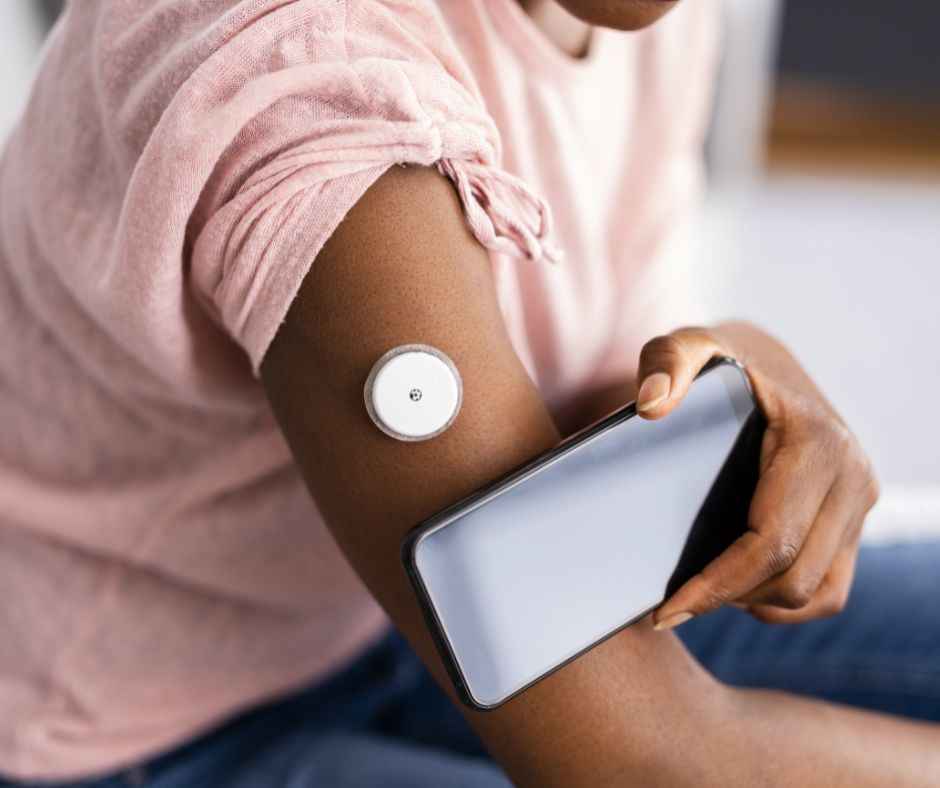
A 7-week project with Penn Medicine researchers to redesign a wearable device that tracks physiological activity in Obsessive-Compulsive Disorder (OCD) patients outside of clinical settings, so their symptoms could be studied as they naturally occur at home rather than only in a lab or clinic visit.

My Role
Team Co-Lead
Duration
2 months
Tools
Sewing, 3D Printing, Figma, Miro
Overview
Challenge
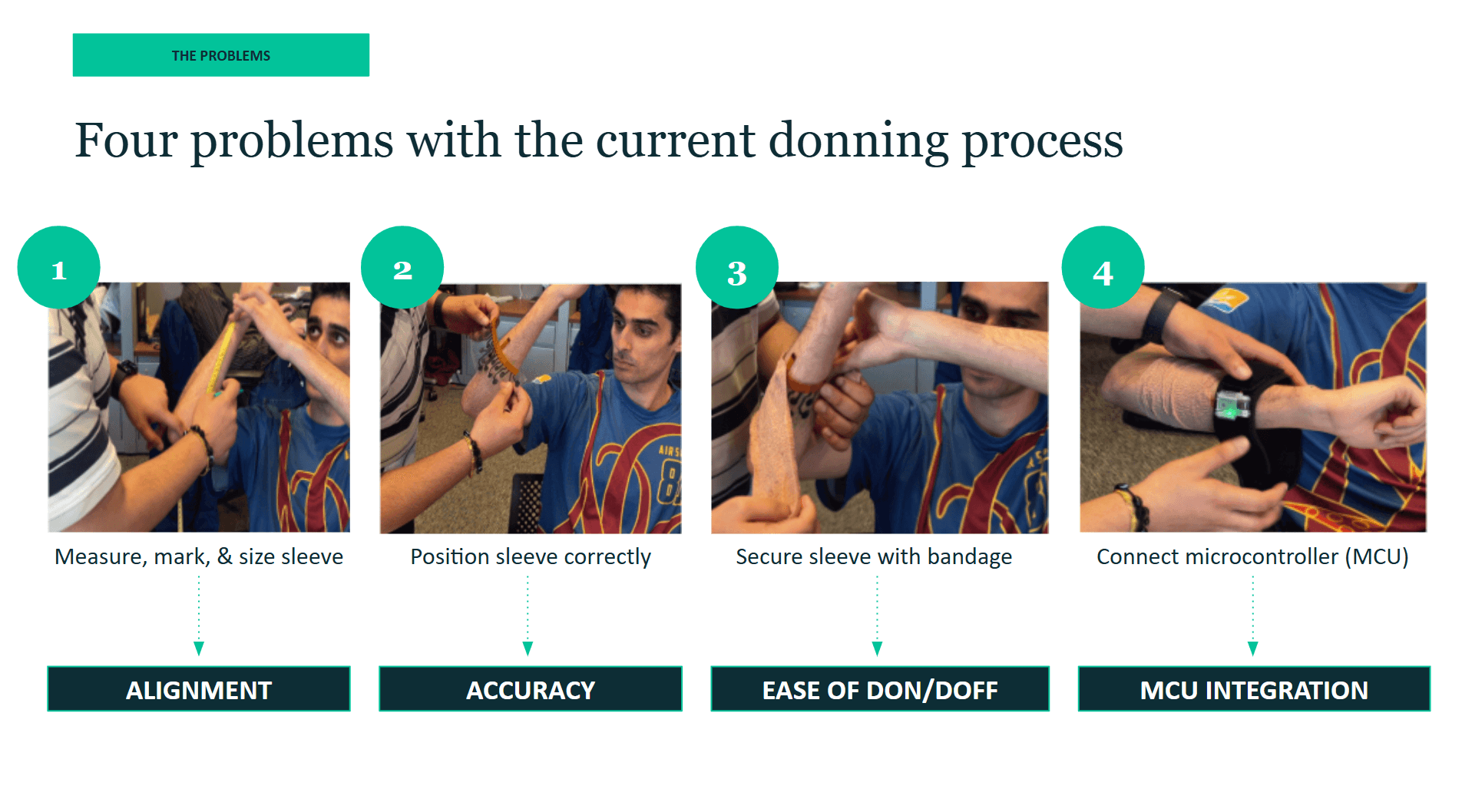
Existing psychiatric assessments only capture a snapshot of an OCD patient's symptoms, not their day-to-day experience. Penn Medicine's research team had built a wearable device to collect data continuously at home, but putting it on required a second person and 15 minutes, and the sensor placement had to stay precise and repeatable for the data to be usable. Patients, meanwhile, needed something they could put on independently, quickly, and comfortably — without it feeling like a visible medical device. The core tension: the technology demanded precision, but patients would only comply if the device was fast, discreet, and easy to use alone.
Solution
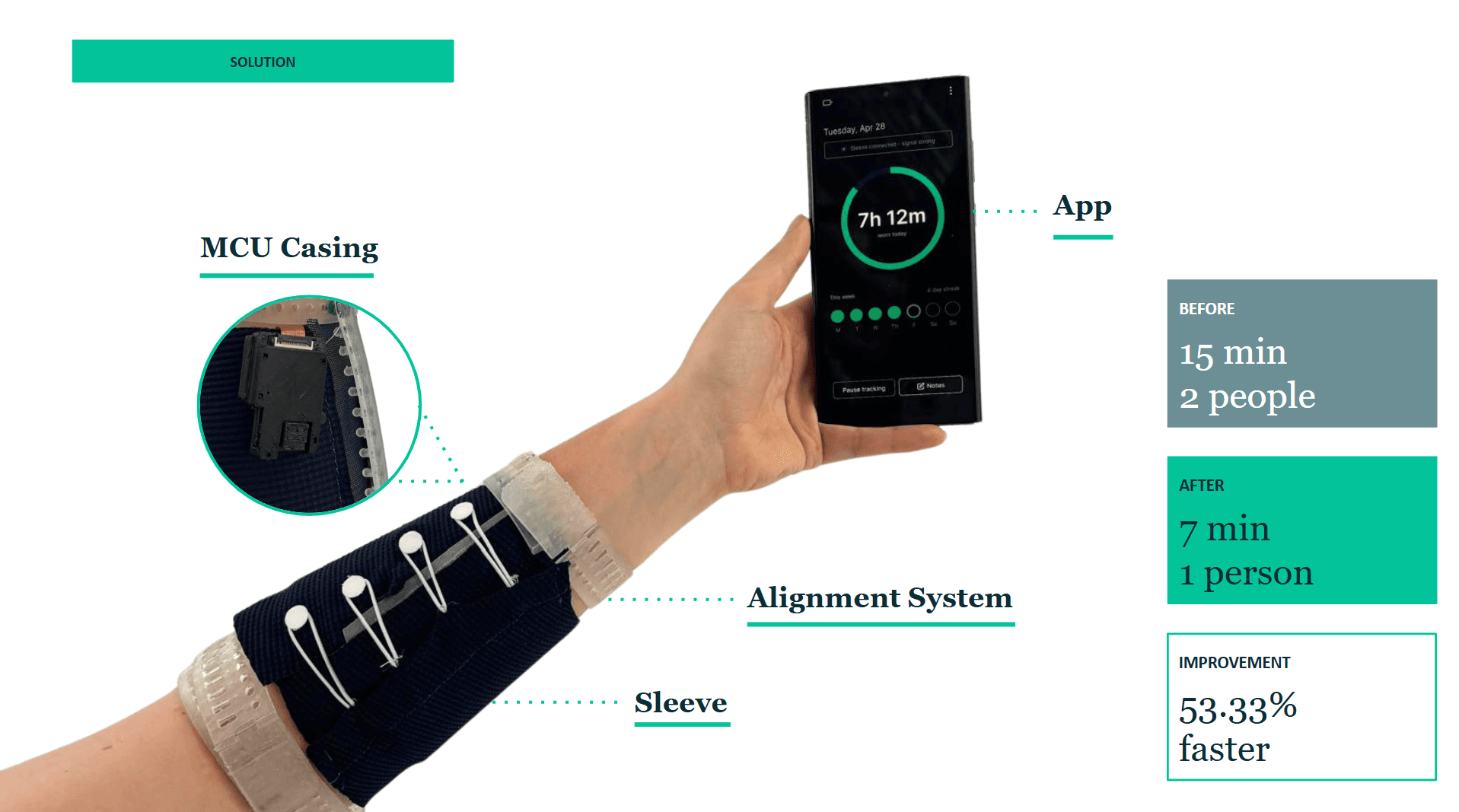
A 4-component wearable redesign — sleeve, alignment system, casing, and companion app — that lets OCD patients independently and comfortably put on the device at home in under half the time, without a second person or clinical visit, so the device can actually be worn long enough to collect meaningful physiological data.
Research
I co-led 10 interviews and 4 co-design sessions across four stakeholder groups: the Penn Medicine research team (technical and fabrication constraints), OCD patients (daily wear preferences and stigma concerns), general wearable users (what makes people keep wearing a device long-term), and clinicians/wearable specialists (comfort vs. accuracy tradeoffs).
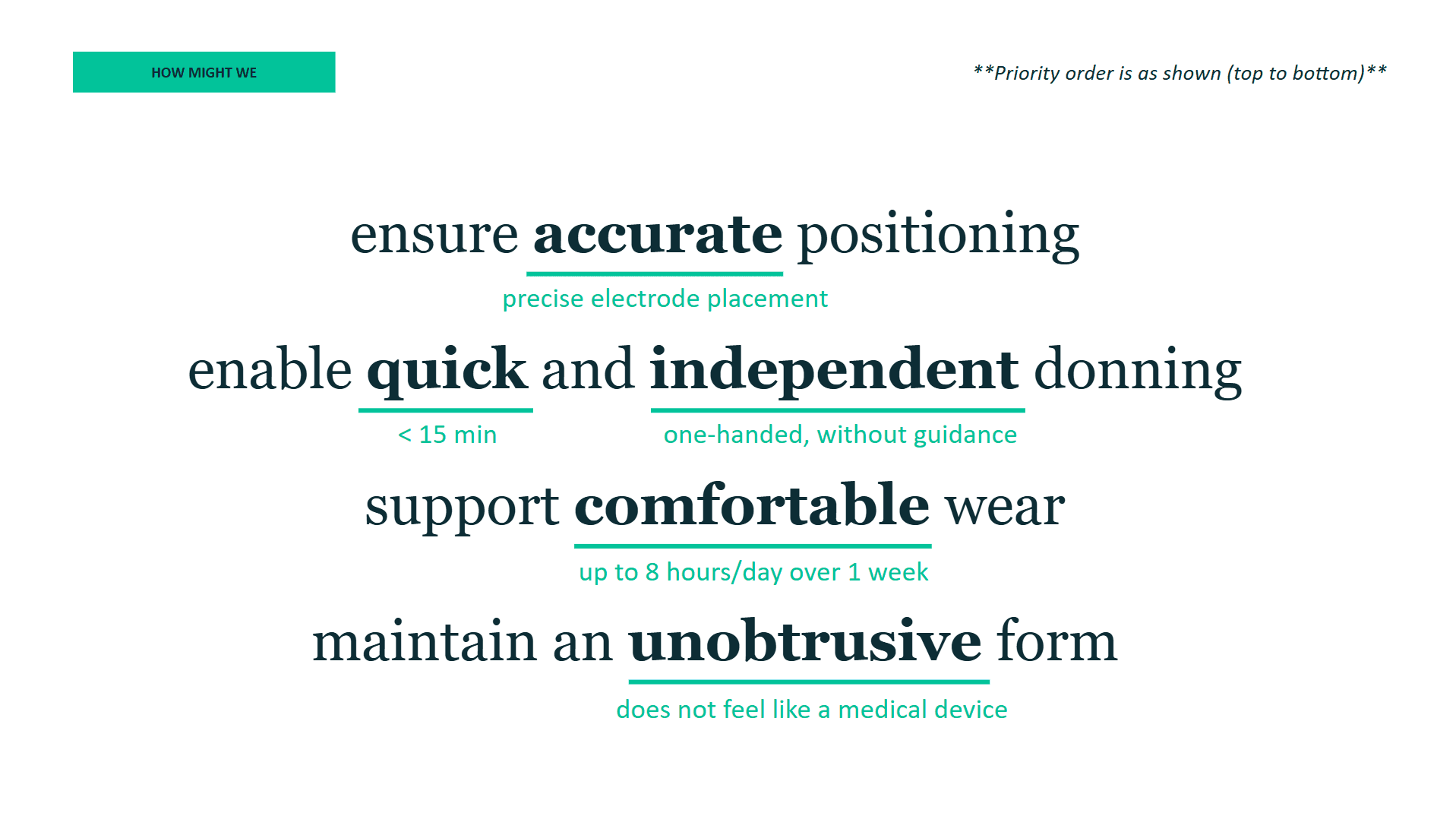
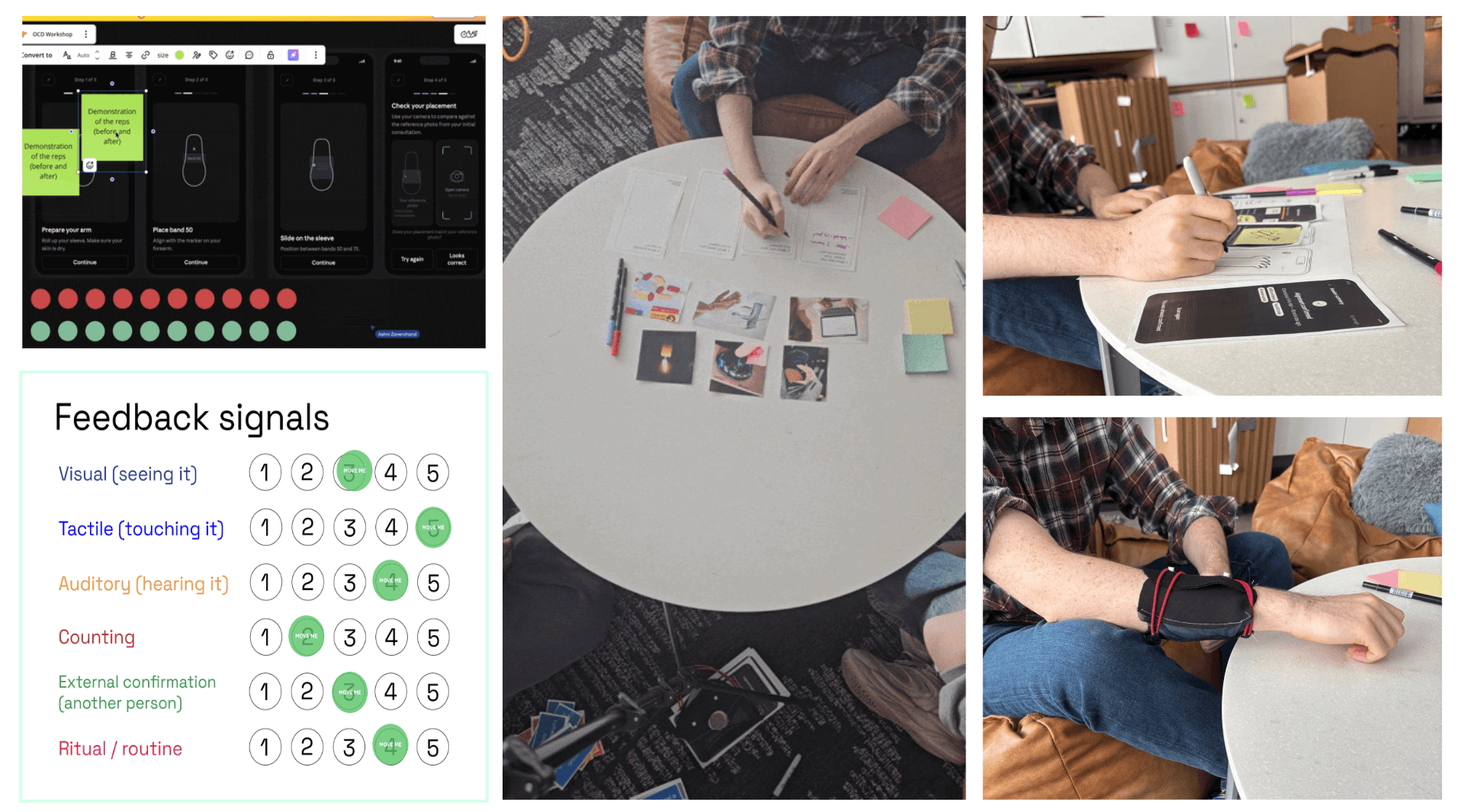
OCD patients cited stigma and visibility as real barriers to consistent wear.
"I’d want a slim profile that can fit with different types of clothes. I want other people to know I have OCD and have more empathy.”
General wearable users pointed out that devices get worn long-term once they stop "feeling like a device".
Clinicians confirmed that ease of use and comfort directly drive whether data ever gets collected at all.
Design
We synthesized our findings into a 4-component redesign:
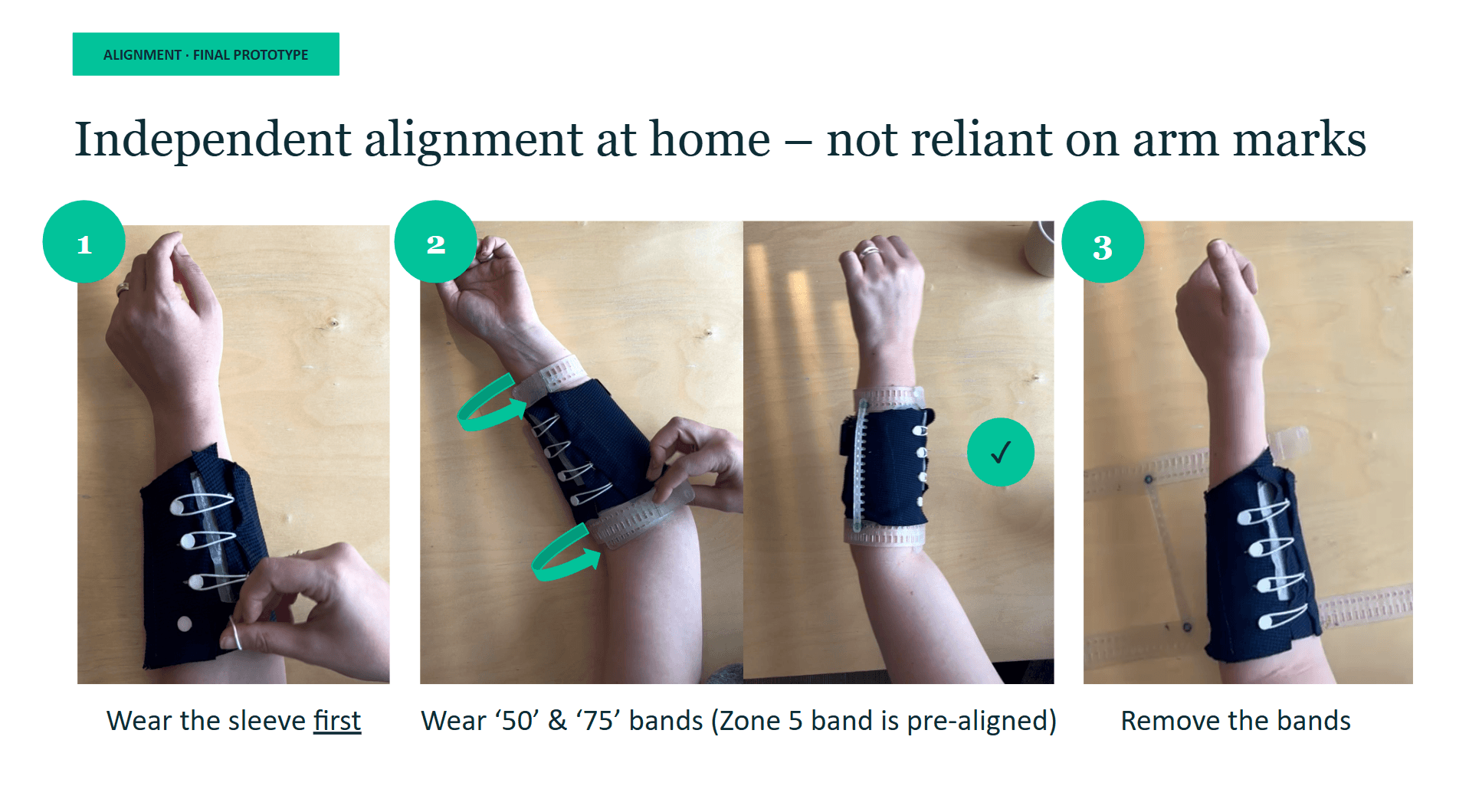
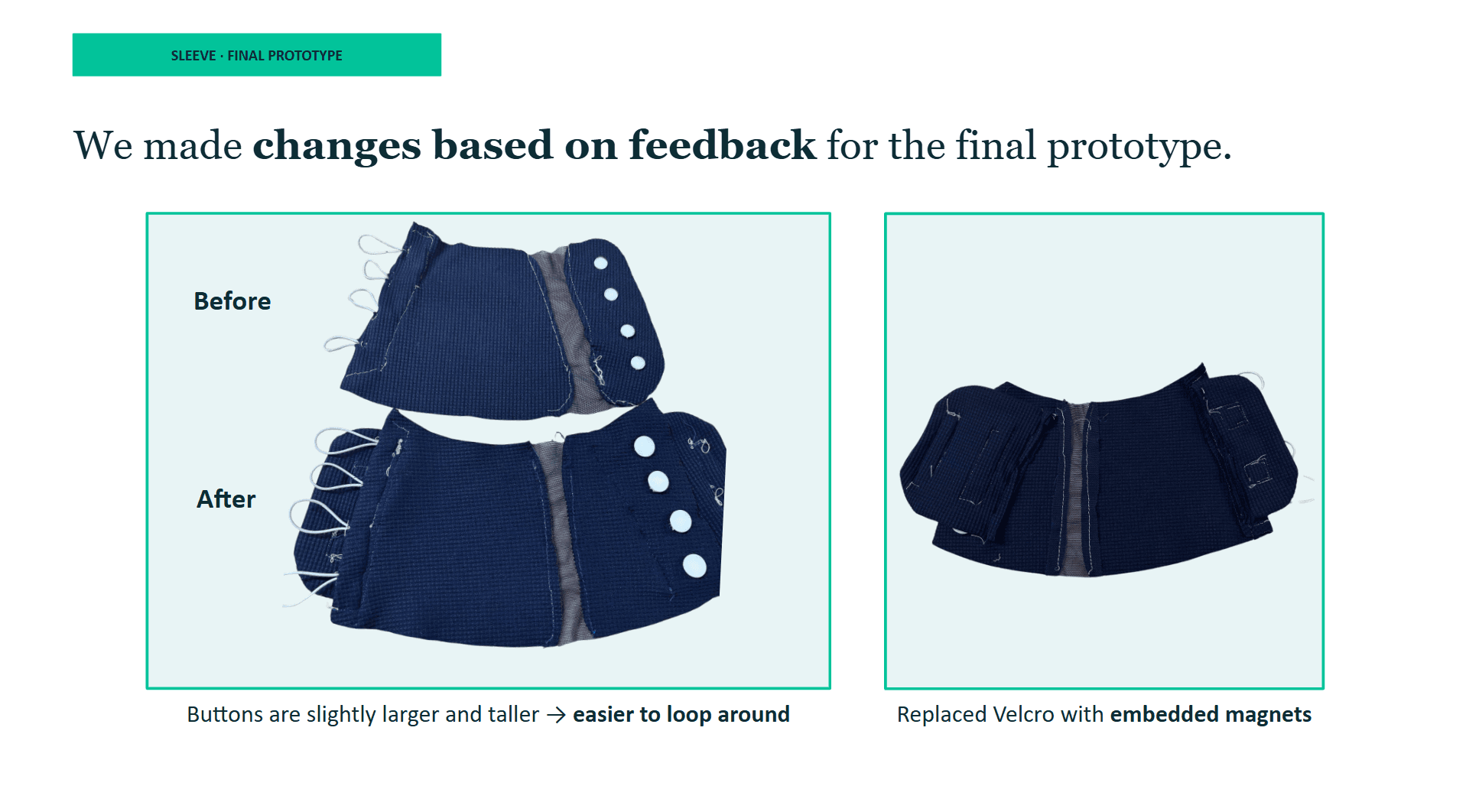
Sleeve: reworked attachment and adjustment mechanism (moved through several iterations, including different fabrics/Velcro/magnetic closures) to make one-handed donning and doffing possible without sacrificing comfort.
Alignment system: a wristband-based reference method (landed on an elastic resin material after testing silicone casting and rigid 3D prints that failed on positioning or skin contact) that lets patients independently reposition the device accurately at home, without needing a clinician present after the first visit.
Microcontroller (MCU) Casing: a modular, snap-fit housing for the device electronics, designed to be swapped in and out easily.
Patient-facing App: 18 screens across 4 user flows, shaped directly by patient co-design feedback (e.g., avoiding percentage-based progress metrics that caused anxiety, and reframing clinical language like "triggered" into gentler terms).
Results
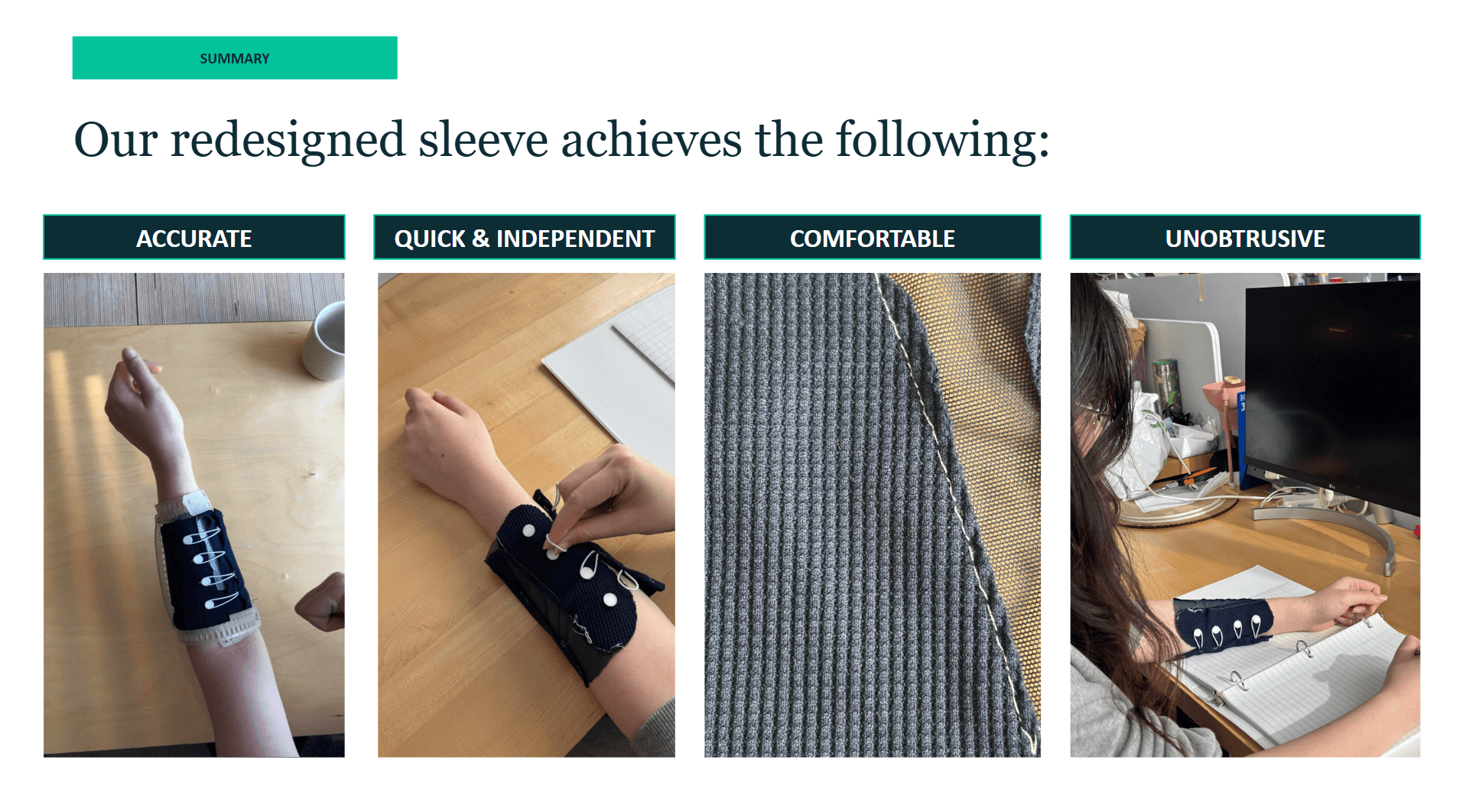
The redesign cut donning time by 53% (15 minutes down to 7) and eliminated the second-person requirement entirely, enabling patients to independently complete at-home wear sessions long enough to generate meaningful physiological data, directly addressing the original barrier to data collection.